
Autumn Sensory Play Ideas for our Favourite Sensory Season
Autumn seems to do half the sensory play planning for us. The ground turns crunchy, the air smells earthy, the colours shift overnight, and every walk offers something new to collect, pour, squash, sort, sniff, or investigate.
That is why autumn sensory play always feels so easy to love. It is rich without being complicated. A handful of leaves, a tray, a spoon, and a few conkers can become a sorting game, a pretend café, a sound hunt, or a calm invitation to explore.
It is our favourite sensory season because it gives children real textures and real changes to notice. Crisp leaves break in tiny pieces. Pine cones feel rough and woody. Pumpkins are smooth on the outside and stringy inside. Rain makes mud, puddles, and shiny stones. There is so much to touch, see, hear, and smell before you even open the craft cupboard.

Autumn turns ordinary materials into sensory treasures
The best sensory play does not need to be polished. In autumn, the most interesting resources are often found on the way home from the park.
Leaves alone can offer a full play session. They can be compared by size, colour, sound, and shape. Some are smooth and flat. Some are curled, dry, and brittle. Some crumble as soon as they are touched. A child can build piles, make leaf soup, hide small toys underneath, or scrunch them into a bowl just to hear the crackle.
Natural autumn treasures work well because they are open-ended. There is no single “right” way to play with them. That makes them ideal for creative, child-led exploration.
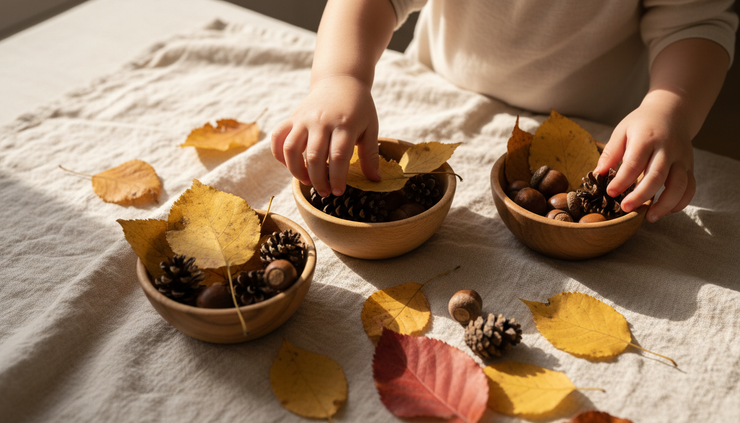
A simple autumn collection might include:
Dry leaves
Use them for crunching, tearing, sorting, posting into tubes, or making pretend animal beds.
Pine cones
Roll them, count them, paint them, wash them, or add them to small world woodland play.
Conkers and acorns
Sort them by size, move them with tongs, drop them into containers, or use them as pretend food.
Twigs
Build tiny fences, make marks in dough, stir pretend potions, or create woodland scenes.
Smooth stones
Wash them, line them up, hide them in leaves, or add them to a nature-themed sensory bin.
A shallow tray helps keep the play manageable. Add bowls, spoons, muffin tins, baskets, egg boxes, or cardboard tubes. These simple tools invite filling, emptying, transferring, and organising, which are skills children often return to again and again.
A quick safety note helps keep the fun relaxed. Avoid small items for children who still mouth objects. Check natural materials for sharp pieces, mould, or anything unsafe. Supervise closely, especially with conkers, acorns, and tiny loose parts.
Dry crunchy play makes autumn sound wonderful
Some sensory play is quiet and calming. Autumn also gives us the joy of crunchy, rustly, crackly sound play.
A dry leaf tray is one of the simplest ways to explore sound and texture. Spread clean, dry leaves in a tray or large storage box. Add wooden spoons, metal teaspoons, cardboard tubes, scoops, and containers. Then let the sounds happen.
Children can:
Scrunch leaves in their hands
Drop leaves through tubes
Sweep leaves with a small brush
Hide objects under the leaves and listen as they search
Tear leaves into tiny pieces
Compare the sound of dry leaves with softer fresh leaves
This kind of play supports careful listening. It also gives children the chance to use pressure and movement in different ways. A gentle touch makes a soft rustle. A firm squeeze makes a sharp crunch. A sweep sounds different from a stomp.
For a lovely indoor activity, create an autumn sound basket. Add objects that make different natural sounds, such as dried leaves, seed pods, pine cones, wooden rings, and crinkled paper. Invite children to shake, tap, roll, and compare.
You can also take the idea outside. An autumn listening walk turns a normal walk into a sensory adventure. Listen for leaves under shoes, wind in trees, birds calling, puddles splashing, and twigs snapping. There is no need to make it formal. A simple “What can you hear?” can pull attention towards the season.
If you want a calmer version, make a crunchy path. Place leaves in a line across the garden, patio, or hallway and let children walk, crawl, or drive toy animals through them. Add language as you go: crunchy, crispy, soft, loud, quiet, rough, smooth, dry, damp.
These words matter. Sensory play gives children something real to attach language to. “Crunchy” makes more sense when it is happening in their hands.
Squashy autumn play is messy in the best way
Autumn is not only crisp and dry. It is also soft, damp, squidgy, and wonderfully messy.
Pumpkins are the obvious star here. Scooping out a pumpkin is a full sensory experience. The outside is hard and smooth. The inside is cold, slippery, stringy, and full of seeds. Some children dive straight in. Others prefer a spoon, scoop, or glove. Both responses are fine.
Turn pumpkin scooping into a play invitation by adding:
A bowl for seeds
Tweezers or tongs
A spoon or ice cream scoop
A tray for strings and pulp
A magnifying glass
A small jug of water for washing seeds
Pumpkin seeds can be washed and used for sorting or counting once they are clean and dry. They are slippery when wet and smooth when dry, which makes them interesting in different ways.
Apple play is another autumn favourite. Sliced apples can be used for printing, smelling, squashing, and comparing. Add cinnamon sticks, oats, and wooden spoons to make a pretend apple crumble tray. For younger children, keep pieces large and age-appropriate, and supervise closely.
Autumn playdough is also hard to beat. A plain dough can become seasonal with a few safe additions. Try orange colouring, a little cinnamon, dried orange slices for decoration, or natural loose parts such as leaves and pine cones. If scented ingredients are used, keep allergies and sensitivities in mind.
A simple autumn dough setup might include:
Brown, orange, or yellow dough
Pine cones for pressing patterns
Leaf-shaped cutters
Cinnamon sticks for rolling
Small stones for making “pumpkin patches”
Toy woodland animals
Mud deserves a mention too. Autumn mud is different from summer mud. It is cooler, darker, wetter, and often full of leaves. A mud kitchen or outdoor tray can become a soup station, pie shop, potion lab, or woodland café. Add ladles, old pans, cups, and natural finds.
Messy play can feel like a lot, but it does not need to take over the whole day. Use a tray, put towels nearby, choose washable clothes, and set a clear boundary. The mess is part of the learning, but it can still have limits.

Autumn small world play brings stories into the season
Sensory play becomes even richer when children use it to tell stories. Autumn is perfect for small world play because the season already feels full of tiny homes, hiding places, animals, and changes.
A woodland small world tray is easy to set up. Start with a base, then add loose parts and figures.
Good bases include:
Dried lentils
Oats
Shredded paper
Leaves
Moss, if it is safe and clean
Brown rice
Fabric scraps in autumn colours
Then add woodland animals, wooden people, small houses, logs, stones, pine cones, and twigs. A cardboard box can become a den. A leaf can become a blanket. A pine cone can become a tree.
Children might make animals collect food, build nests, hide from rain, or prepare for winter. Through that story, they explore real seasonal ideas in a playful way.
This kind of setup works especially well after an autumn walk. Collect a few safe items together, then bring them home and build a scene based on what you noticed. If you saw squirrels, add squirrels. If you found mushrooms, make pretend mushrooms from dough. If the path was muddy, add a little cocoa-coloured dough or brown fabric.
You can also create themed trays for different autumn moods.
Woodland den
Use pine cones, leaves, twigs, toy foxes, hedgehogs, and fabric scraps.
Harvest basket
Use oats, apples, toy vegetables, scoops, and baskets.
Rainy day puddles
Use blue fabric, smooth stones, toy ducks, small cups, and a shallow water tray.
Pumpkin patch
Use orange pom-poms, green pipe cleaners, brown rice, and little signs.
Small world play can be as simple or detailed as you like. The magic usually comes from the child’s ideas, not from a perfect setup.
If the base material is not suitable for a child’s age or stage, swap it. Large fabric leaves, scarves, chunky wooden pieces, and bigger toy animals can create the same seasonal feel without tiny loose parts.
Calm autumn play helps children slow down
Autumn has plenty of lively, messy energy, but it also suits quieter sensory play. The softer light, cooler days, and earlier evenings make calm invitations feel natural.
A nature mandala is a lovely place to start. Gather leaves, petals, small sticks, pine cones, and stones. Arrange them in circles or patterns on the ground, a tray, or a large piece of paper. This is slow, focused work. It also gives children time to notice shape, colour, balance, and repetition.
Leaf matching is another gentle idea. Collect pairs of leaves or choose leaves that share one feature. They might match by colour, size, shape, or texture. For a simple version, place several leaves on a tray and ask which two look most alike. For a more open version, let children decide their own groups.
Water play can become calmer in autumn too. Fill a shallow tray with warm water and add leaves, floating apple slices, small pumpkins, or pine cones. Offer a ladle, sponge, and cup. The warmth adds comfort, and the natural items make the tray feel seasonal.
A scent station can be peaceful as well. Use sealed jars or little bowls with autumn smells such as cinnamon sticks, orange peel, cloves, rosemary, damp leaves, or apple slices. Keep scents gentle and check for sensitivities. The aim is curiosity, not overpowering fragrance.
For children who enjoy mark-making, try leaf rubbing. Place a leaf under paper and rub over it with a crayon. The veins appear like a hidden pattern. It is simple, satisfying, and a good way to connect touch with sight.
These quieter activities are useful after school, before dinner, or on rainy days when everyone needs something grounding. They do not demand much setup, and they can be packed away quickly.

Easy autumn sensory play ideas to try this week
When a season offers this much, the hardest part can be choosing where to start. The best approach is to keep it simple and repeat the ideas children enjoy.
Try one of these easy setups:
Autumn treasure tray
Add leaves, pine cones, conkers, bowls, and scoops.
Pumpkin investigation
Offer pumpkin seeds, pulp, spoons, and a magnifying glass.
Leaf crunch box
Fill a storage tub with dry leaves and hide chunky toys inside.
Apple crumble pretend play
Use oats, apple slices, cinnamon sticks, spoons, and bowls.
Woodland animal world
Build a mini forest with twigs, stones, leaves, and animal figures.
Warm water leaf wash
Add leaves to warm water with cloths, sponges, and cups.
Autumn playdough table
Set out dough with leaf cutters, pine cones, stones, and sticks.
Rainy day mud kitchen
Use mud, leaves, old pans, cups, and safe stirring tools.
A good sensory setup does not need every sense involved at once. One strong texture or sound is enough. It also does not need to last for hours. Ten focused minutes of pouring, searching, squashing, or sorting can be valuable.
Autumn Sensory Play Ideas for our Favourite Sensory Season is more than a cosy phrase for us. It sums up why this time of year works so well for hands-on play. Autumn invites children to notice change. It gives them materials that feel real and interesting. It turns walks into collections and collections into stories.
Start with what is already around you. Pick up a leaf. Roll a conker. Scoop a pumpkin. Listen to the crunch underfoot. The season is full of ready-made play, and that is exactly why autumn keeps winning our sensory hearts.


Comments